

My Store
Design Technologies – Project 3 The Rube Goldberg Machine AC9TDE8K03: 9 Lesson Plans + Marking Rubric + Worksheet Suggestions (Year 7/8)
Design Technologies – Project 3 The Rube Goldberg Machine AC9TDE8K03: 9 Lesson Plans + Marking Rubric + Worksheet Suggestions (Year 7/8)
Couldn't load pickup availability
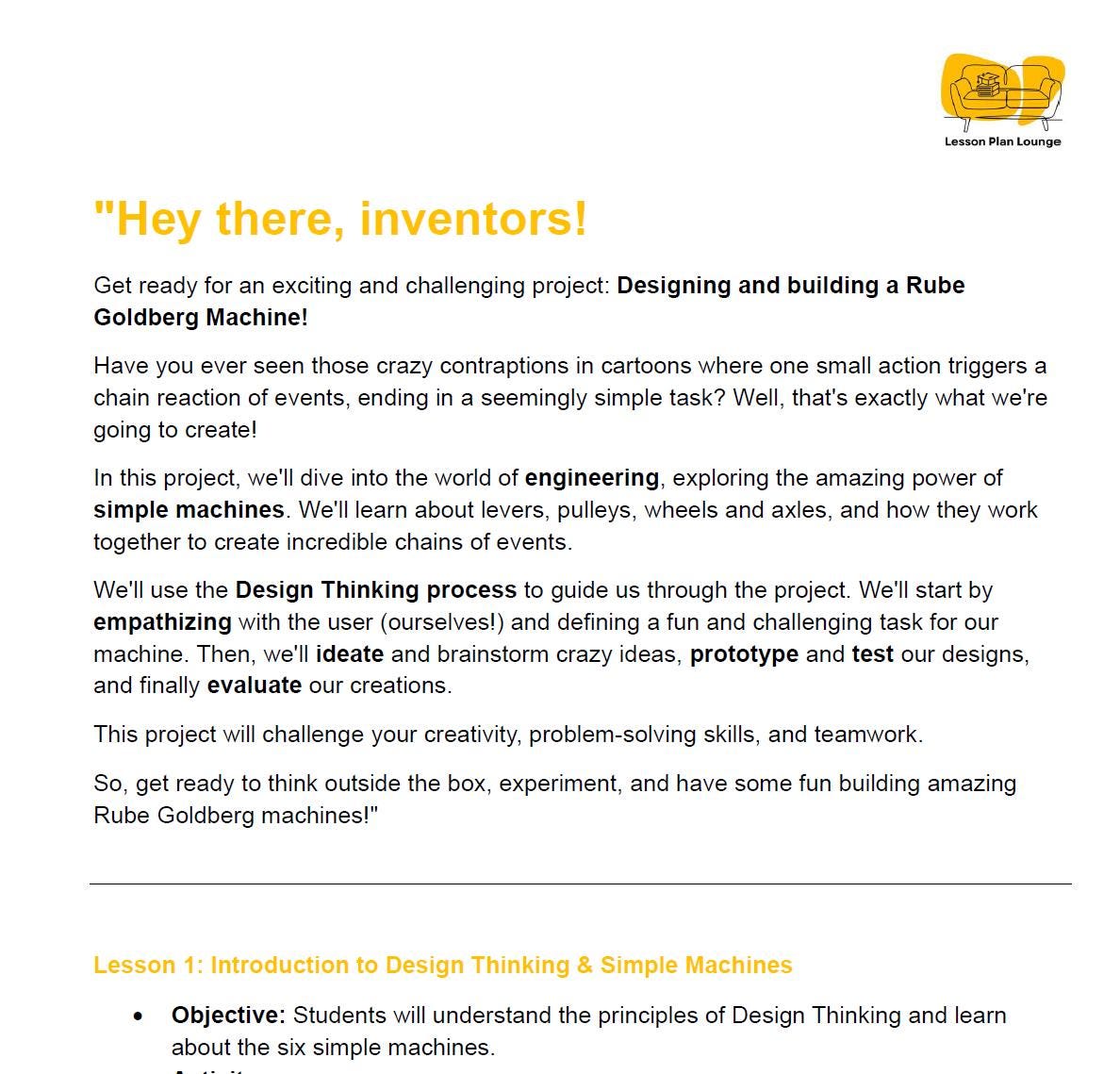
How do you teach Engineering and Physics in a way that is chaotic, creative and utterly captivating? Transform your Year 7 and 8 Design Technologies lessons with this kinetic unit that turns simple machines into complex chain reactions!
Step into the lab of "The Rube Goldberg Machine," a comprehensive Design Technologies unit designed to save you time and spark genius. This unit applies the Design Thinking process to a whimsical engineering challenge, blending the science of "Force, Motion and Energy" with the creativity of "Problem Solving", while connecting to essential lessons about resilience and precision.
Packed with "simple machine scavenger hunts," "crazy 8s brainstorming" and "rigorous testing" phases, this unit will transform your classroom into an invention hub where students don't just learn about mechanics, they master them as Engineers, Innovators and Critical Thinkers.
What's Inside?
This comprehensive unit is meticulously planned to cover the Year 7 & 8 Design Technologies curriculum (specifically AC9TDE8K03) with hands-on engagement. You will find:
- 9 Engaging Lesson Plans: Guide your students through the complete engineering design process. From the initial 'Introduction to Design Thinking & Simple Machines' and 'Defining Constraints', to 'Ideation', researching 'Mechanisms' and the iterative cycle of 'Prototyping, Testing and Refinement'.
- Curriculum Aligned: This unit supports key learning objectives for Years 7-8. It covers Engineering Principles and Systems (analysing force, motion and energy), Investigating and Defining and Collaborating and Managing projects.
- Play-Based & Experiential Learning: Foster genuine understanding with interactive activities. Imagine your students conducting 'Simple Machine Experiments' with levers and pulleys, using 'Mind Mapping' to visualise energy flow, building 'Initial Prototypes' from cardboard and troubleshooting their own complex contraptions.
- Built-in Assessment & Differentiation: Effortlessly monitor student progress. The unit includes formative tasks like the 'Troubleshooting Log' and differentiation strategies such as providing visual aids for construction or extension tasks like researching famous inventors.
- Real-World Skills: Help students connect tech theory to future careers. Activities encourage them to think like professionals, exploring roles like Engineers, Architects and Project Managers while learning that failure is just a step towards success in the iterative design process.
Summative Assessment Task:
Conclude the unit with the "Final Construction, Testing & Evaluation" task. Students build their final Rube Goldberg machine, conduct rigorous testing to ensure it completes a specific task (like ringing a bell) and present their creation to the class. The assessment includes a comprehensive Rubric covering research, planning, construction quality and testing outcomes.
Cover Your Term of Design Tech!
This unit is designed to bridge the gap between abstract physics concepts and tangible fun. Provide your students with high-quality, scaffolded lessons that turn ordinary classroom materials into extraordinary feats of engineering. Stop the endless search for engaging STEM resources and reclaim your time.
Download "The Rube Goldberg Machine" today and watch your students engineer the impossible!
Share