

Lesson Plan Lounge
FREE Download - Teacher Reflection Worksheet: The Three R's in Action - Education
FREE Download - Teacher Reflection Worksheet: The Three R's in Action - Education
Couldn't load pickup availability
Turn challenging classroom moments into opportunities for professional growth and student success. This Teacher Reflection Worksheet is a practical, trauma-informed tool designed to help educators deconstruct classroom incidents using the neurosequential model of Regulate, Relate and Reason.
By moving away from reactive discipline and toward reflective practice, this worksheet empowers you to identify the biological "why" behind a student's behaviour and refine your approach for future success.
Key Reflection Features
This two-page guide walks you through a three-step process to ensure both teacher and student return to a state of learning readiness:
Step One: Regulate (The Body)
- Self-Assessment: Reflect on your own internal state during the incident to ensure you are co-regulating effectively.
- Zone Identification: Categorize the student’s state—whether they were Red (Hyper-aroused), Yellow (Over-stimulated), or Grey/Blue (Withdrawn)—to determine the right sensory intervention.
Step Two: Relate (The Connection)
- The Approach Audit: Evaluate if you used an "Invite" (offering a tool) rather than a "Command" (demanding compliance), which can trigger shame in trauma-impacted students.
- Relational Wealth: Check your connection history with the student and identify if more proactive rapport-building is needed.
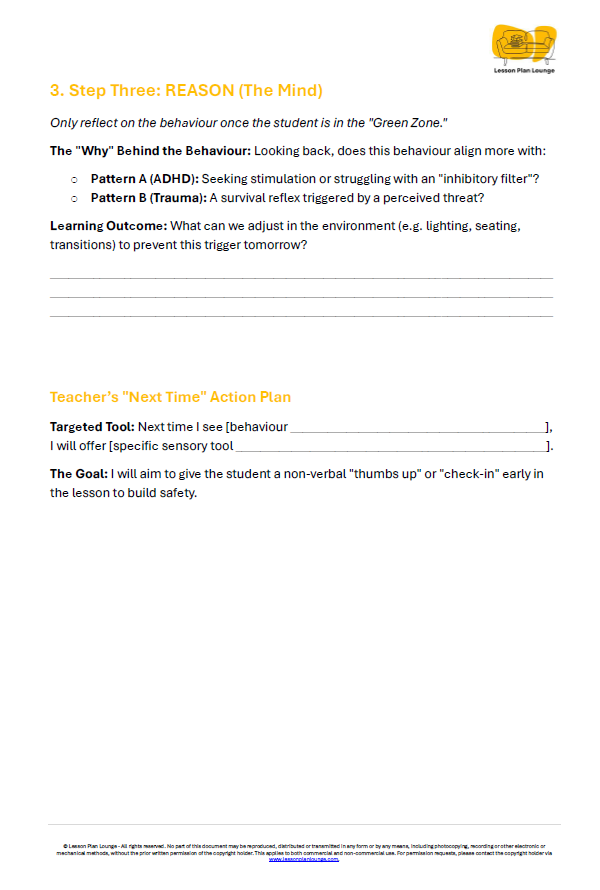
Step Three: Reason (The Mind)
- Root Cause Analysis: Determine if the behaviour aligns with Pattern A (ADHD/Inhibitory filter) or Pattern B (Trauma/Survival reflex).
- Environmental Adjustments: Identify practical changes to lighting, seating, or transitions to prevent future triggers.
Actionable Outcomes
The worksheet concludes with a "Next Time" Action Plan, allowing you to commit to specific sensory tools and non-verbal check-ins that build a foundation of safety for your most vulnerable learners.
Format: Digital Download (PDF) Best For: Professional development, behaviour incident debriefs and inclusive classroom planning.
Share